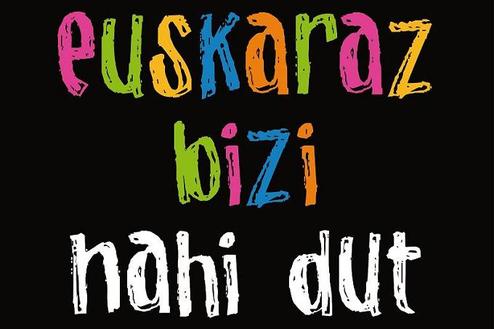
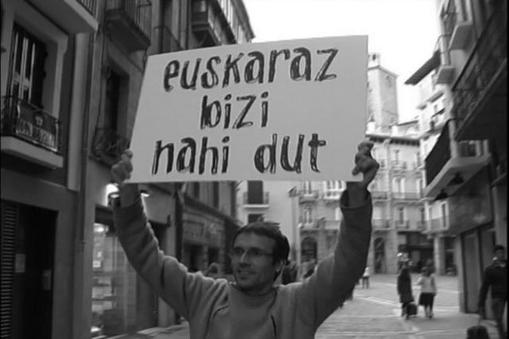
Euskaraz bizi nahi dut = we want to live life in Basque
Euskara, the Basque language, is completely unrelated to any other language, a language isolate, the most ancient in Europe, the last remaining vestige of the languages spoken in Europe before the Indo-Europeans came. It is one of the most fascinating things about the Basque country, and perhaps the most powerful focus for Basque nationalism (which I’ll write about in more detail in a later post).
As with the Celtic languages in Wales, Ireland and parts of Scotland, Euskara is compulsory these days for all young people in school, so, whether native Basque or immigrant, you will learn Euskara. There are three types of school, and you can choose to go to any of them: Basque-speaking, Spanish-speaking or mixed Basque and Spanish. Whichever you go to, you’ll have to learn both Basque and Spanish. (Basque-speaking schools are called ‘ikastolak’, and the first one was opened in 1914.)
As with the Celtic languages in Wales, Ireland and parts of Scotland, Euskara is compulsory these days for all young people in school, so, whether native Basque or immigrant, you will learn Euskara. There are three types of school, and you can choose to go to any of them: Basque-speaking, Spanish-speaking or mixed Basque and Spanish. Whichever you go to, you’ll have to learn both Basque and Spanish. (Basque-speaking schools are called ‘ikastolak’, and the first one was opened in 1914.)

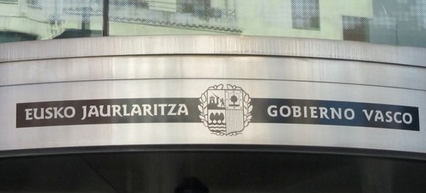
Just as in Wales, Ireland and parts of Scotland, a great deal of text here, including all official government text, comes in two languages (Spanish and Euskara).
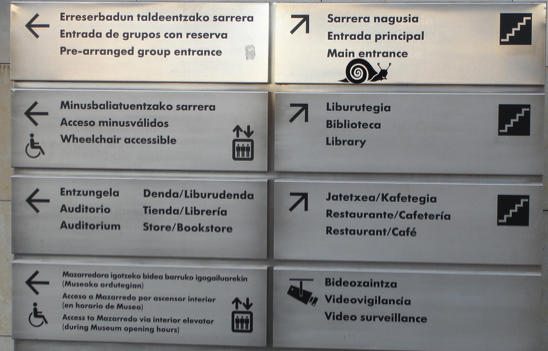
Here are some trilingual signs at the Guggenheim:
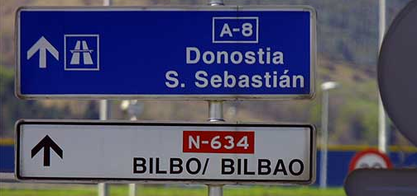
The big cities have two names, a Spanish one and a Basque one (Bilbao-Bilbo, Vitoria-Gasteiz, San Sebastian-Donostia), as does the entire region (Pais Vasco-Euskadi).
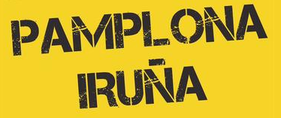
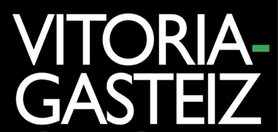
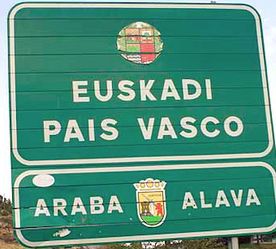
There are of course newspapers and tv and radio channels in both Basque and Spanish. The main Basque tv company, EITB, for instance, has one Basque tv channel and one Spanish.
It´s quite common, too, to come across texts, unofficial ones – such as political or communal posters, leaflets, etc. – written all in Euskara, leaving non-Euskara speakers completely clueless. You don’t really have a hope with Euskara, as it is completely unrelated to any other language.
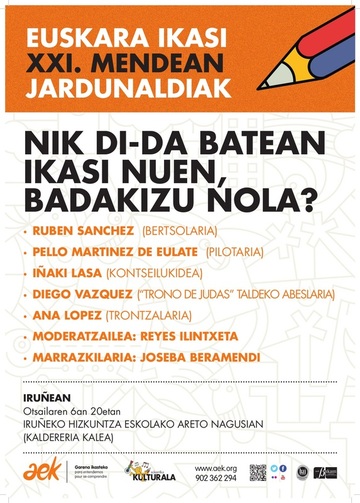
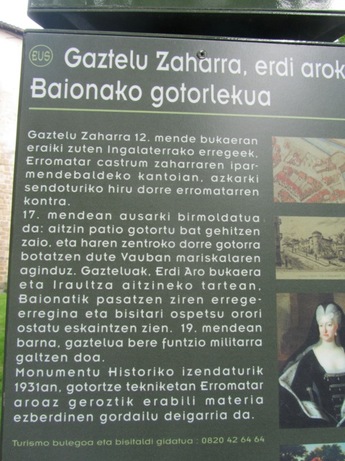
The extent of Euskara use differs across the Basque country. The heartlands of the Basque language (and of Basque nationalism) are in the mountainous areas in the centre, and along the coast between Bilbao and San Sebastian - but in fact pretty much anywhere outside Bilbao and San Sebastian you are likely to hear a great deal of Basque spoken – and the smaller and more remote the community the more likely that is. (Remember too that Euskara is spoken in the French Pays Basque, though less than in Spanish Basque Country).
Here in Bilbao, you don’t hear much Euskara. There are two main reasons why many people don’t speak Euskara in the bigger cities. One is the suppression of the language (and Catalan too in Barcelona) during Franco´s dictatorship, from the 1930s to the 1970s, especially in the cities. As a consequence of this, a whole generation of older people don´t speak Euskara (although many have learnt it since Franco’s demise). In many places, you´re more likely to hear young people, growing up during the 80s and after, speaking it, as they’re the ones who learnt it at school.
The other reason is to do with immigration to Bilbao (and other cities, but mainly Bilbao) from other non-Euskara-speaking parts of Spain. Between 1950 and 1970 there was a major industrial boom in the Basque Country. Thousands of people came here, many from the poorer regions in the south of Spain, to find work. The population of the three big cities, and some of the smaller ones too, doubled in those twenty years – and of course this influx of people had no idea about Euskara. But even so, some of them and their children have learnt or are learning Euskara. (This huge influx of workers also explains, by the way, why there is so much horrendous 60s and 70s domestic and commercial building throughout the Basque Country!)
Here in central Bilbao you rarely hear Spanish spoken in the streets or shops, though you are more likely to hear it here in the Casco Viejo (old town) or in older parts of the grittier suburbs such as Portugalete, than in the newer or posher parts of Bilbao. (In general, throughout Euskadi, the old towns are slightly grittier areas where left-wing nationalism is likely to thrive and Euskara is more likely to be spoken).
We certainly haven’t had to learn any Euskara to get by here – except for two words/phrases which are universally used: ‘agur’ (pronounced ‘agoor’) which means ‘goodbye’ (no one says ‘adios’ except to complete foreigners….), and ‘eskerrik asko,’ which means ‘thank you’ (again ‘gracias’ is mostly used to and by foreigners.) (For some reason, the Euskara for 'hello' ('kaixo') is not used much - people tend to say 'hola' in Spanish, or another Basque word 'aupa' which means something like 'hi' or cheers.)
Here in Bilbao, you don’t hear much Euskara. There are two main reasons why many people don’t speak Euskara in the bigger cities. One is the suppression of the language (and Catalan too in Barcelona) during Franco´s dictatorship, from the 1930s to the 1970s, especially in the cities. As a consequence of this, a whole generation of older people don´t speak Euskara (although many have learnt it since Franco’s demise). In many places, you´re more likely to hear young people, growing up during the 80s and after, speaking it, as they’re the ones who learnt it at school.
The other reason is to do with immigration to Bilbao (and other cities, but mainly Bilbao) from other non-Euskara-speaking parts of Spain. Between 1950 and 1970 there was a major industrial boom in the Basque Country. Thousands of people came here, many from the poorer regions in the south of Spain, to find work. The population of the three big cities, and some of the smaller ones too, doubled in those twenty years – and of course this influx of people had no idea about Euskara. But even so, some of them and their children have learnt or are learning Euskara. (This huge influx of workers also explains, by the way, why there is so much horrendous 60s and 70s domestic and commercial building throughout the Basque Country!)
Here in central Bilbao you rarely hear Spanish spoken in the streets or shops, though you are more likely to hear it here in the Casco Viejo (old town) or in older parts of the grittier suburbs such as Portugalete, than in the newer or posher parts of Bilbao. (In general, throughout Euskadi, the old towns are slightly grittier areas where left-wing nationalism is likely to thrive and Euskara is more likely to be spoken).
We certainly haven’t had to learn any Euskara to get by here – except for two words/phrases which are universally used: ‘agur’ (pronounced ‘agoor’) which means ‘goodbye’ (no one says ‘adios’ except to complete foreigners….), and ‘eskerrik asko,’ which means ‘thank you’ (again ‘gracias’ is mostly used to and by foreigners.) (For some reason, the Euskara for 'hello' ('kaixo') is not used much - people tend to say 'hola' in Spanish, or another Basque word 'aupa' which means something like 'hi' or cheers.)
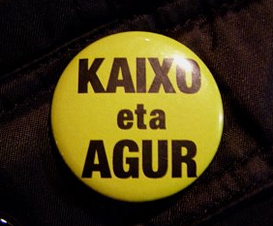
On the other hand, we have picked up a certain amount. ‘K’, ‘x’ and ‘z’ are very common consonants. The unusual consonant cluster is ‘tx’ which is pronounced ‘ch’ as in ‘church’. We pick things up by seeing the Basque equivalents of Spanish words, for instance ‘jatetxea’ for ‘restaurante’. We learn too from learning about Basque culture – for instance we know about ‘bertsolariak’ (improvised verse chanters), ‘txistulariak’ (players of the Basque flute, the ‘txistu’) and various other elements of Basque folk culture. We know that the ‘txistu’ is the flute, the ‘txistulari’ is the player, and that ‘txistulariak’ is the plural of ‘txistulari’, and that the ending ‘-ak’ signifies a plural noun.
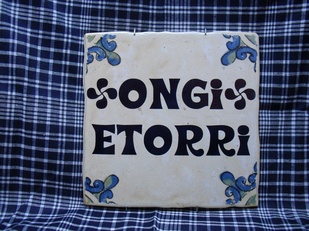
We know that the word ‘eta’ means ‘and’ (not to be confused with the terrorist group ETA…). We know that ‘ongi etorri’ means ‘welcome’, ‘bai’ means ‘yes’ and ‘ez’ means’ no’.
We know that the word ‘eta’ means ‘and’ (not to be confused with the terrorist group ETA…). We know that ‘ongi etorri’ means ‘welcome’, ‘bai’ means ‘yes’ and ‘ez’ means’ no’.
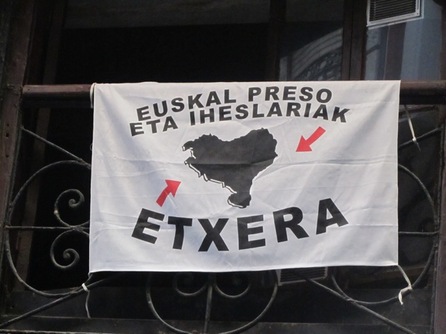
We know that the suffix ‘tegia’ indicates a place where things are made or sold, e.g. a ‘sagardotegia’, a cider (‘sagardo’) house. We know the word ‘etxea’, one of the most important concepts in Basque culture, which means ‘home’, and ‘herria’ which means ‘country’, and that these words can be adjusted to ‘etxera’ and ‘herrira’ to signify movement towards home or the homeland. And so on. (By the way 'etxera' is the slogan of the political movement to have Basque prisoners returned to the Basque country, which I'll write more about later - see picture below.)
There’s a great deal of enthusiasm throughout the region for the language, just as there is in parts of Wales, Scotland and Ireland for Welsh and Gaelic. Bilbao still conducts most of its business in Spanish, but even here there is widespread enthusiasm for Euskara, even on the part of those who don’t speak it.
Throughout the Basque Country, too, there is a huge movement towards learning Euskara. There are branches of AEK (Alfabetatze Euskalduntze Koordinakundea) all over the place (one of the main ones in Bilbao is on our street) which specialise in running evening classes for people to learn the language, and many people of all ages attend these after work.
Throughout the Basque Country, too, there is a huge movement towards learning Euskara. There are branches of AEK (Alfabetatze Euskalduntze Koordinakundea) all over the place (one of the main ones in Bilbao is on our street) which specialise in running evening classes for people to learn the language, and many people of all ages attend these after work.
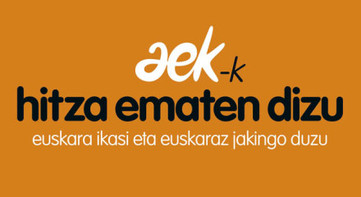
They also organize events throughout the year throughout the Basque Country designed to promote Euskara, such as bertsolari events (improvised verse chanting – see previous post) and Basque folk song events. There are also two big ‘national’ Euskara-focused events: the ‘Korrika’ and the Basque Language Day.
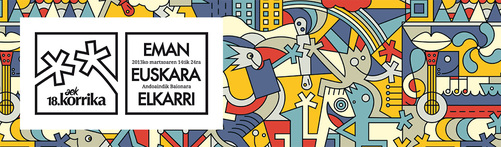
The Korrika is an extraordinary relay race covering hundreds of miles which links most towns in the 'Euskal Herria' – in both France and Spain. Many thousands of people take part in this massive event which symbolically links all the Basque-speaking lands. The slogan this year was 'Eman euskara elkarri' ('Give Basque to one another').
The Korrika is an extraordinary relay race covering hundreds of miles which links most towns in the 'Euskal Herria' – in both France and Spain. Many thousands of people take part in this massive event which symbolically links all the Basque-speaking lands. The slogan this year was 'Eman euskara elkarri' ('Give Basque to one another').
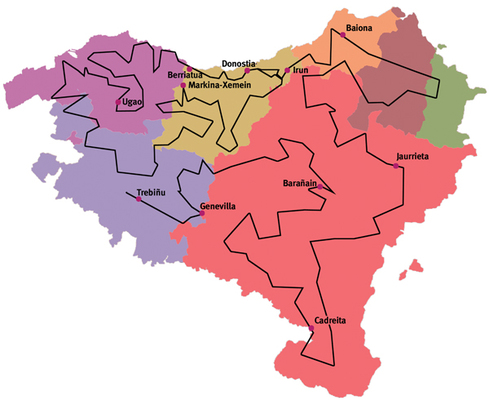
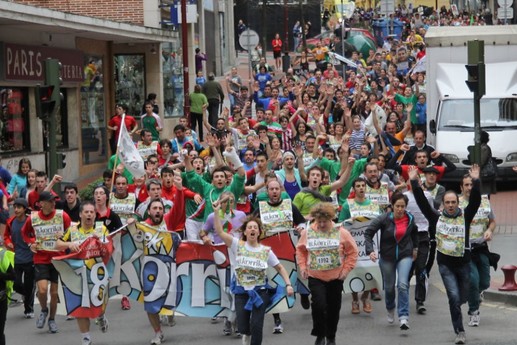
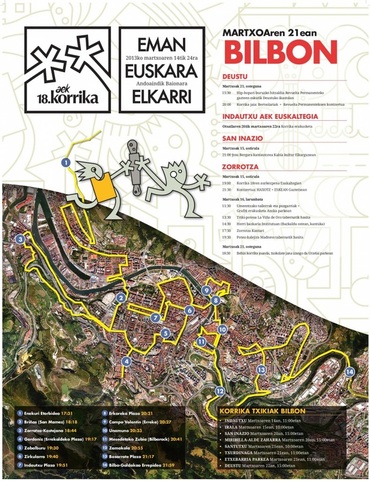
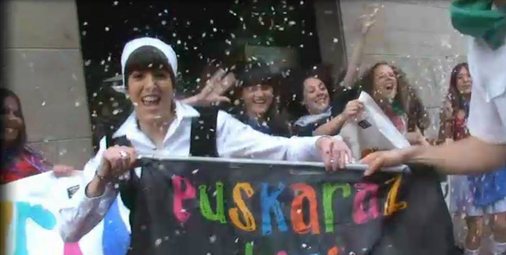
The other event, International Basque Language Day (Euskararen Eguna, December 3rd) sees celebrations happening in cities, towns and villages throughout Euskal Herria. This annual celebration was initiated in 1948 whilst the language was still banned in Euskadi, and celebrated by Basques outside the Basque Country until the language was once again allowed after Franco. The slogan of the day is 'Euskaraz bizi nahi dut' - 'we want to live life in Basque'.
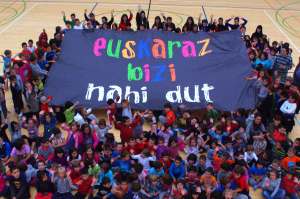
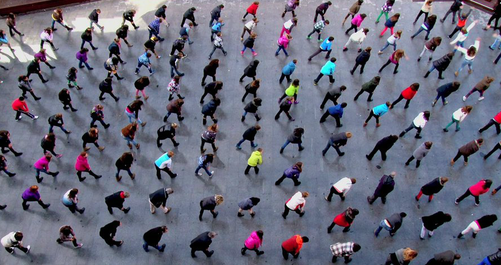
Each year, towns around the Basque country make communal 'lipdub' and 'flashmob' videos to celebrate the day which give a sense of the amazing community cohesion and strength of feeling for the language. Massive numbers of people turn out to sing and dance along to a rousing Basque pop anthem recorded for the occasion, Here are some rousing examples:
http://vimeo.com/55845328
http://vimeo.com/11260312
http://vimeo.com/43803415
http://vimeo.com/55845328
http://vimeo.com/11260312
http://vimeo.com/43803415
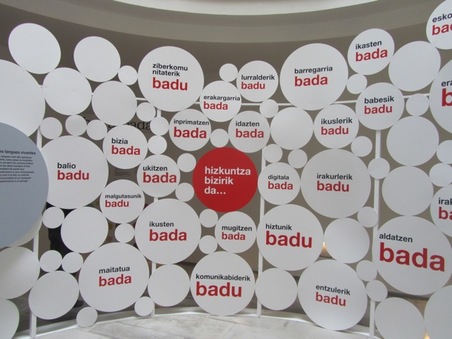
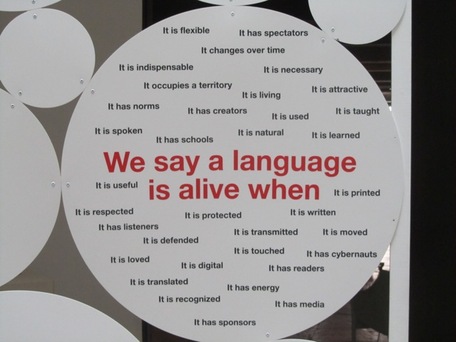
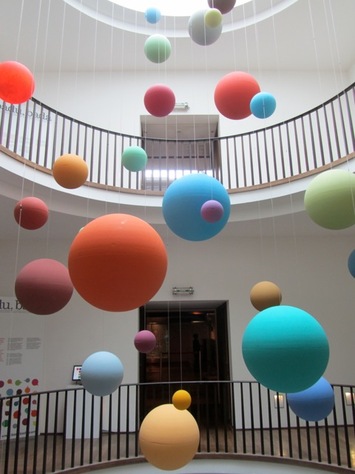
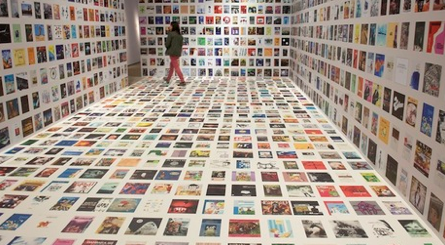
There´s also a Basque Language Centre ('Euskararen Etxea') in Bilbao, a kind of museum where anyone can go to find out all about the language. We haven't yet been but intend to before we leave. And recently there's been a beautifully designed exhibition in San Sebastian about the language called 'badu, bada' (meaning 'it is, it has'):
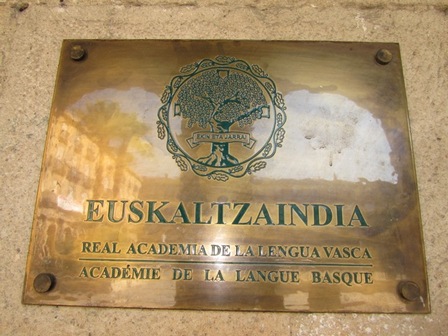
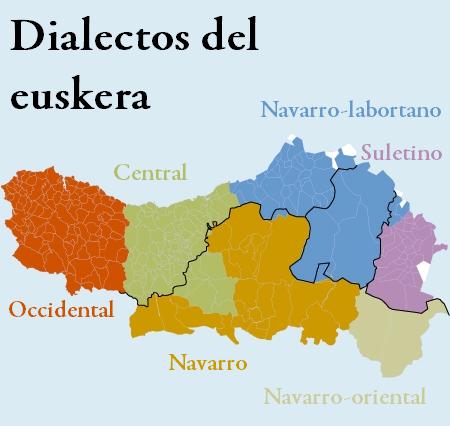
The nerve centre of the various Euskara revivals of the last century, and the current huge growth in the language, is the Basque Language Academy (Euskaltzaindia), created in 1918 in Bilbao, which was responsible in the 1970s for ‘creating’ a viable standard Basque language (‘Batua’) from the several (around 7 or 8) very different geographical dialects of the language that existed, and remains responsible for overseeing the language. (Until the 16th century, Euskara was largely an orally transmitted language. A number of very different dialects developed in different parts of Euskal Herria (so much so that people on one side can’t easily understand people on the other). It wasn’t until the suppression of the language by Franco threatened it with extinction that a standard language was agreed on.)
Finally, to give you a further taste of everyday Basque language things, here are some typical personal names....
First names: Male: AITOR, GORKA, INAKI; Female: AMAIA, EDER, IRATI (NB There are many more...)
Surnames: Etxebarria, Zubiondo, Bidarte, Ibarra, Gorrotxategi, Extxegoien, Urdangarin, Goikoetxea... etc.
First names: Male: AITOR, GORKA, INAKI; Female: AMAIA, EDER, IRATI (NB There are many more...)
Surnames: Etxebarria, Zubiondo, Bidarte, Ibarra, Gorrotxategi, Extxegoien, Urdangarin, Goikoetxea... etc.
... some typical Basque place names (these are all suburbs of Bilbao)...
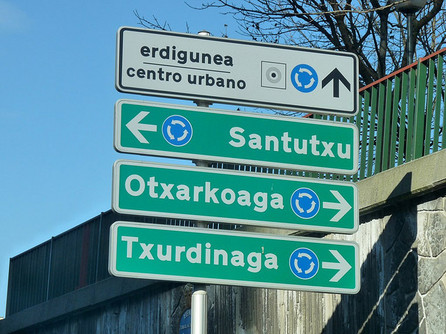
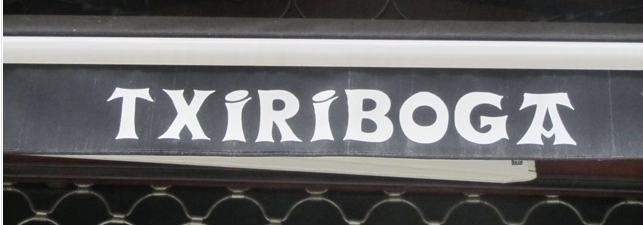
... and a couple of local tavern names, written in the classic Basque font, which is derived from ancient inscriptions on stones in the Basque Country:

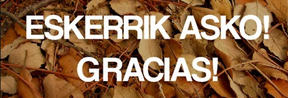
That's all for now! ESKERRIK ASKO and ..... AGUR!
 RSS Feed